How To Search for Vancouver Property Records
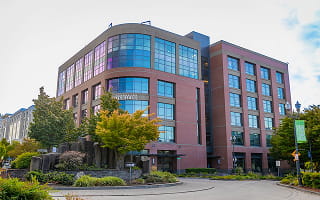
You should always review property records before buying or investing in real estate. They are a very effective due diligence tool and offer valuable insight into ownership histories, assessed values, tax obligations, zoning classifications, liens, foreclosures, and other crucial details that can guide informed decision-making. In Vancouver, property records are public records, meaning they can be viewed or copied by anyone interested in doing so. The key is knowing where to look. Below is a list of helpful resources you can use to find different types of Vancouver property records.
Clark County Auditor's Office

The Clark County Auditor's Office is the official custodian of deeds, plats, easements, covenants, and other documents that establish property ownership, interests, and transfers in the City of Vancouver. The office provides an official records search platform that you can use to look up these documents online. Searches may be done by several criteria, including document number, name, book/page, and recording date. You can also visit the office's recording department at 1300 Franklin St., 2nd Floor, Vancouver, WA 98660 for in-person services (note that fees may apply) or contact the office at (564) 397-2208 or recording@clark.wa.gov for general inquiries and assistance.
Clark County Assessor's Office
The Clark County Assessor's Office is responsible for identifying and valuing real property in Vancouver for tax purposes and is a key resource for detailed property information, including assessed values, ownership data, building and property characteristics, sales histories, and more. You can access this information online by address or tax account number through the county's Property Information Center. Please note that name-based searches cannot be initiated remotely; however, they are available from public access computers in the joint lobby self-service area of the assessor's office, located at 1300 Franklin Street, 2nd Floor, Vancouver, WA 98660. You can also call the office at (564) 397-2391 or email assessor@clark.wa.gov for general inquiries or assistance.
Clark County Treasurer's Office
The Clark County Treasurer's Office is responsible for billing and collecting taxes on all real property located in the City of Vancouver. This office is the primary resource for tax-related property information, such as tax statements, payment histories, outstanding balances, and delinquency records. You can access this information online using either the office's Property Tax Search tool (searchable by property account number, name, or address) or the county's Property Information Center (searchable by account number or address). You can also visit the treasurer's office at 1300 Franklin Street, Vancouver, WA 98660 for in-person services or contact them at (564) 397-2252 or treasoff@clark.wa.gov for general information and assistance.
Clark County Superior Court
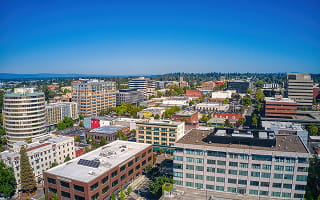
The Clark County Superior Court is the primary resource for property records tied to legal matters and proceedings in Vancouver, including foreclosure filings, lien claims, boundary disagreements, and civil judgments affecting real estate and property use. Most of these records can be accessed online through the Washington Courts Odyssey Online Case Search portal. You can also visit the Clark County Clerk's Office at 1200 Franklin Street, Vancouver, WA 98660-5000, to view and obtain copies of records not available online. Note that fees may apply. You can call the office's civil department at (564) 397-2292 for additional information or assistance.
Vancouver Property Taxes
Vancouver property taxes are a vital funding source for essential public services, including law enforcement and fire protection, emergency response services, public transportation, road and infrastructure maintenance, parks, clean water supply, trash collection, and community programs. The Clark County Assessor is responsible for determining the taxable value of properties in the city, while the County Treasurer manages tax billing and collection. Properties are valued using a combination of market data (comparable sales) and cost analysis; income-based approaches may also be applied to income-producing properties. Once a property's assessed value has been established, local tax rates (set by the City of Vancouver, Clark County, and other relevant tax authorities) are applied to calculate its final tax bill.
Tax statements are typically mailed out by February and payable in two installments: the first half is due by April 30th, and the second half is due by October 31st. Deadlines are shifted to the next business day when due dates fall on a weekend or holiday. Partial payments may be accepted before the due dates, but taxes are considered delinquent after each deadline and begin accruing interest and penalties immediately. Long-term delinquency can result in foreclosure and tax sales proceedings to recover the amounts owed. You can pay your Vancouver property taxes through several options, including online (via e-checks and credit/debit cards), mail-in payments, over the phone by dialing 1-833-440-8685, and in person at the county treasurer's office. You may contact the office at (564) 397-2252 for additional information and assistance.
![]() Assessments
Assessments

The Clark County Assessor's Office assesses real property in Vancouver to determine each property's market value, defined as "the price it would likely sell for in an open and competitive market between a willing buyer and seller". The sales comparison (evaluating recent sales of comparable properties) and cost (estimating the cost of replacing a structure) approaches are generally applied to residential properties. For commercial properties, the income approach (estimating the property's income-generation potential) may also be applied. Properties are assessed at 100% of their "true and fair" value, meaning that each property's taxable value reflects its full market value, not a reduced or partial percentage.
Notices of value are usually mailed to property owners in June (some may be sent by September), detailing the assessments that will be used to calculate the upcoming year's tax bill. Please note that these notices are typically only issued for properties that have changed value. If you believe your property has been incorrectly assessed, you may contact the assessor's office for an informal review. If the issue remains unresolved, you can proceed with filing a formal appeal with the Clark County Board of Equalization (BOE). The deadline for filing is July 1st or 60 days from the mailing date of the notice, whichever is later. If you are still unsatisfied with the board's decision, you may appeal further to the Washington State Board of Tax Appeals within 30 days. You can contact the assessor's office at (564) 397-2391 or the BOE at (564) 397-2337 for additional information or assistance with the appeals process.
![]() Appraisals
Appraisals

Vancouver assessments work similarly to appraisals. They both determine the fair value of property by comparing similar properties with others in the local area that have sold recently. In cases of odd structures or new construction, the county may call upon an appraiser to help determine the value. Estate planners, courts, and lenders also use appraisals to value real property.
![]() Tax Rates
Tax Rates

The median effective property tax rate in Vancouver, Washington, is 0.93%, slightly below the national median of 1.02% but above the Washington state median of 0.88%. However, the average annual property tax bill in the city is $4,166, significantly higher than the national average of $2,400.
Here's a look at how Vancouver's tax rate compares to other counties in Washington:
- Benton County 0.98%
- Ferry County 0.93%
- Garfield County 1.09%
- Grant County 1.20%
- King County 0.88%
- Mason County 0.86%
- Pend Oreille County 0.87%
- Pierce County 1.02%
- Snohomish County 0.79%
- Spokane County 0.93%
- Thurston County 0.94%
- Walla Walla County 0.91%
- Yakima County 1.10%
![]() Exemptions
Exemptions

While Vancouver's property tax rates generally align with national and regional figures, actual tax bills are often high and can represent a significant expense for some residents. Fortunately, there are several tax relief programs available to qualifying homeowners designed to help lessen the tax burden. These include:
-
Senior Citizen or Disabled Person Exemption: Provides partial or full property tax relief for qualifying senior (61+) or disabled homeowners who meet specific income requirements. Surviving spouses of qualifying homeowners may also be eligible.
-
Current Use Program: Offers tax relief by lowering assessments for property owners who voluntarily preserve or manage land for specific, pre-approved uses.
-
Senior Citizen or Disabled Person Deferral: Allows qualified homeowners (aged 60+ or disabled) to postpone paying property taxes on their primary residence until the property is sold or the title is transferred.
You can contact the Clark County Assessor's Office at (564) 397-2391 to learn more about these programs or for assistance with applying.
Vancouver Building Permits/Inspections
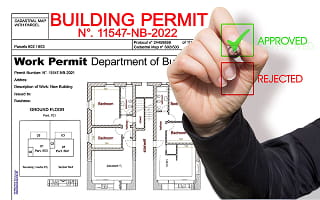
Permits are required for most construction, remodeling, demolition, home improvement, and repair projects in Vancouver. These permits are issued by the Vancouver Community Development Department and must be pulled before any work begins. Exceptions are typically made for finish work (painting, cabinetry or countertop installation, etc.), general maintenance repairs, and certain other minor projects, provided the work does not affect a building's structural components or major systems. You can apply for permits, pay fees, and schedule inspections through the city's Online Permit Center. A separate ePlans platform is available for uploading plans and drawings for review (note: account registration may be required for both platforms). If you prefer in-person services, you can visit the department's office at 415 W 6th St., Vancouver, WA 98660. You can also call (360) 487-7833 or email eplans@cityofvancouver.us for inquiries and general assistance.
Common types of permits issued in Vancouver include:
-
Building Permits: Required for constructing, altering, or repairing structures.
-
Residential Permits: Issued for projects involving one- and two-family residential buildings, modular homes, and mobile homes.
-
Commercial Permits: Issued for projects involving commercial, industrial, and multi-family residential buildings (three or more units).
-
Demolition Permits: Required for tearing down whole or portions of buildings.
-
Electrical Permits: Required for installing or modifying electrical systems, wiring, or panels.
-
Mechanical Permits: Required for HVAC system installation or modifications.
-
Plumbing Permits: Required for installing or altering water supply, sewer, drainage, and other plumbing systems.
When applying for any of these permits, you must submit the proper documentation (building plans, blueprints, contractor licenses, materials lists, etc.). You must also pay the appropriate fee.
Building inspections are part of the permit process, and they ensure that the work complies with local building and safety codes. You can schedule an inspection through the online portal or in person at the office during regular business hours.
Real Estate in the City of Vancouver
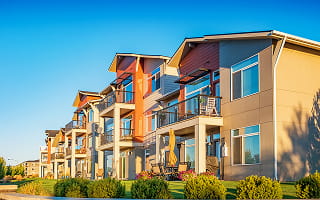
Located on the north bank of the Columbia River, Vancouver is Washington's fourth-largest city and the county seat of Clark County. Known for its deep historical roots, the city was briefly the capital of Washington Territory and is home to Pearson Field, one of the oldest continuously operating airfields in the nation. Vancouver is also consistently recognized as one of the best places to live in the U.S., offering residents a unique mix of urban amenities, outdoor access, and vibrant cultural events. Local highlights include the Fort Vancouver National Historic Site, the Vancouver Farmers Market, the historic Kiggins Theatre, the Vancouver Wine and Jazz Festival, and the Salmon Creek Greenway.
Vancouver, Washington, has a population of 190,915 residents. There are 89,916 housing units in the city, with roughly 95% of these units occupied and 52% owner-occupied. Housing options include single-family homes, townhomes, condos, apartments, multi-family units, manufactured homes, and mobile homes, with common housing styles like Victorian, Rustic, Craftsman, Mid-Century, Modern, and Contemporary. The average home value in Vancouver, WA, is $502,813, down 0.9% from previous years. Keep in mind that actual values may vary considerably across neighborhoods. Here are some examples:
- Five Corners $496,184
- Kevanna Park $385,542
- Meadow Homes $404,017
- Oakbrook $469,285
- Ogden $400,703
- Walnut Grove $478,997
The Vancouver, Washington, real estate market is a slightly competitive, buyer-leaning market. Homes typically go under contract within 25 days of listing, and nearly 28% of these homes sell above the listing price.
Searching across multiple government offices and databases to piece together a complete property profile can be time-consuming, but PropertyChecker simplifies the process by pulling key ownership details, tax records, transaction histories, and more into a single, easy-to-use platform. Whether you are buying, investing, or simply doing your due diligence, visit PropertyChecker.com to get the property information you need in minutes.